
Settlement patterns and cultural landscapes in the past of Oceania
Conveners: Christophe SAND – Institute of Archaeology of New Caledonia and the Pacific (IANCP) - christophe.sand@iancp.nc; Frederique VALENTIN – Arscan-CNRS (France)
Archaeological surveys have since decades identified in the archipelagos of the Pacific a diversified set of pre-contact settlement patterns, testimony of former cultural traditions of landscape appropriation and enhancement. These rank from sometimes massive habitation, ritual or funerary constructions to dense clusters of village/town or fortified settings, as well as extended surfaces of intensified horticultural arrangements. Until recently, the vast majority of the maps produced by archaeologists where the result of long and painstaking survey projects, often in scrub or forested ecological environments, limiting the visibility of field remains and impacting on the extent as well as sometimes the completeness of the final maps. The ever-growing corpus of technical high resolution methods applied to the study of archaeological landscapes, especially (but not only) with the recent development of LiDAR (Laser detection and ranging) coverage in a number of islands across the region, has allowed to renew interpretation of the density of former landscape uses across Oceania. This has prompted reconsideration of a number of well settled assumptions, like the supposed poor use of Melanesian landscapes when compared to Polynesia. This session proposes to present a series of case-studies on the latest developments of archaeological and related studies in the field of cultural landscapes in the Pacific region, addressing different approaches associated to the wide range of techniques that can today be applied to this topic.
Archaeological surveys have since decades identified in the archipelagos of the Pacific a diversified set of pre-contact settlement patterns, testimony of former cultural traditions of landscape appropriation and enhancement. These rank from sometimes massive habitation, ritual or funerary constructions to dense clusters of village/town or fortified settings, as well as extended surfaces of intensified horticultural arrangements. Until recently, the vast majority of the maps produced by archaeologists where the result of long and painstaking survey projects, often in scrub or forested ecological environments, limiting the visibility of field remains and impacting on the extent as well as sometimes the completeness of the final maps. The ever-growing corpus of technical high resolution methods applied to the study of archaeological landscapes, especially (but not only) with the recent development of LiDAR (Laser detection and ranging) coverage in a number of islands across the region, has allowed to renew interpretation of the density of former landscape uses across Oceania. This has prompted reconsideration of a number of well settled assumptions, like the supposed poor use of Melanesian landscapes when compared to Polynesia. This session proposes to present a series of case-studies on the latest developments of archaeological and related studies in the field of cultural landscapes in the Pacific region, addressing different approaches associated to the wide range of techniques that can today be applied to this topic.
Thông báo
Thứ năm, 11 Tháng 12 2025- 17:31
Thứ hai, 29 Tháng 9 2025- 18:20
Thư viện

- Tác giả: Đại tướng, GS.TS Tô Lâm
- Nxb: Công an nhân dân - 2026
- Số trang: 775 tr
- Khổ sách: 16x24cm
- Hình thức bìa: cứng

- Tác giả: Hoàng Đạo Kính
- Nxb: Văn hóa dân tộc-2023
- Số trang: 196tr
- Khổ sách: 20,5x23cm
- Hình thức bìa: mềm
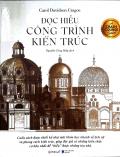
- Tác giả: Carol Davidson Cragoe, Nguyễn Công Hiệp dịch
- Nxb: Dân Trí
- Số trang: 257tr
- Khổ sách: 16x19cm
- Hình thức bìa: mềm
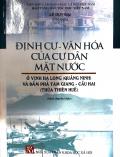
- Tác giả: Lê Duy Đại
- Nxb: KHXH - 2021
- Số trang: 771tr
- Khổ sách: 14,5x20,5cm
- Hình thức bìa: mềm

- Nhóm Tác giả: Tản mạn kiến trúc
- Nxb: Thế Giới-2023
- Số trang: 286tr
- Khổ sách: 14,5x20,5cm
- Hình thức bìa: mềm
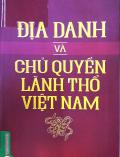
- Tác giả: Kim Quang Minh, Trịnh Anh Cơ
- Nxb: Hà Nội-2024
- Số trang: 184tr
- Khổ sách: 20,5x23cm
- Hình thức bìa: mềm
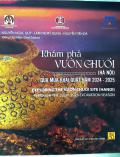
- Tác giả: Nguyễn Ngọc Quý, Lâm Thị Mỹ Dung, Nguyễn Tiến Đà
- Nxb: KHXH- 2025
- Số trang: 255tr
- Khổ sách: 24 x 22cm
- Hình thức bìa: mềm
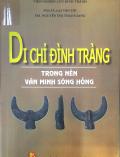
- Tác giả: Lại Văn Tới, Nguyễn Thị Thao Giang
- Nxb: KHXH - 2025
- Số trang: 531tr
- Khổ sách: 16x24cm
- Hình thức bìa: mềm

-Tác giả: Ban Quản lý Quần thể Danh thắng Tràng An
- Nxb: Thế Giới-2024
- Số trang: 86tr
- Khổ sách: 26,5x25cm
- Hình thức bìa: mềm
Tạp chí
Dày 100 trang, khổ 19x27cm
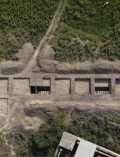
Nằm trong thung lũng Fergana ở phía đông Uzbekistan, khu di tích Kuva, hiện trải rộng khoảng 110.000 mét vuông, từng là một đầu mối rất quan trọng trên Con đường Tơ lụa cổ đại. Mối liên hệ lịch sử của nó với Trung Quốc có từ hơn hai thiên niên kỷ trước, vì người ta tin rằng nó từng là một phần của nhà nước Dayuan cổ đại, được sứ thần Trung Quốc Trương Khiên ghi chép lại vào thời nhà Hán (202 TCN-220 CN).
Dày 100 trang, khổ 19x27cm
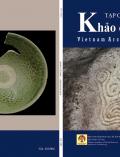
Dày 100 trang, khổ 19x27cm
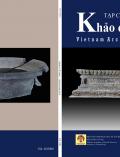
Dày 100 trang, khổ 19x27cm
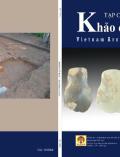
Dày 100 trang, khổ 19x27cm
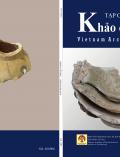
Dày 100 trang, khổ 19x27cm
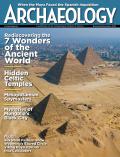
November/December 2025 - Archaeology Magazine
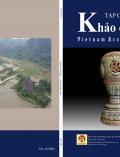
Dày 100 trang, khổ 19x27cm
Tin tức khác
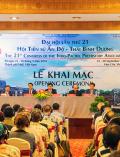
24 Th9 2018 06:12
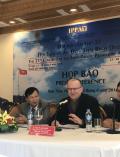
22 Th9 2018 11:09
28 Th8 2018 15:04

15 Th8 2018 13:10
25 Th7 2018 04:21
25 Th7 2018 04:19
Copyright © 2016 by khaocohoc.gov.vn.
Thiết kế bởi VINNO
Tổng số lượt truy cập: 11458183
Số người đang online: 25